Best Cat Toys for Separation Anxiety (Simple Ways to Calm Your Cat)
You close the door…… and within seconds, your cat starts crying.
It’s not just noise. It’s stress.
If your cat cries when you leave, scratches doors, or refuses to relax without you, there’s a good chance they’re dealing with separation anxiety in cats.
This problem is more common than most cat owners think. And if ignored, it can get worse over time.
But here’s the good news simple things like the right toys can make a huge difference. They keep your cat busy, calm their mind, and reduce stress when you’re away.
Can Cats Have Separation Anxiety?
Yes, cats can feel separation anxiety just like dogs.
Even though cats are known for being independent, many of them form strong emotional bonds with their owners. When that bond is suddenly broken even for a few hours they feel confused and stressed.
This is called cat separation anxiety, and it often shows up in indoor cats or pets that spend most of their time with their owner.
Some cats adjust quickly, while others struggle every time you leave the house.
Signs Your Cat Has Separation Anxiety
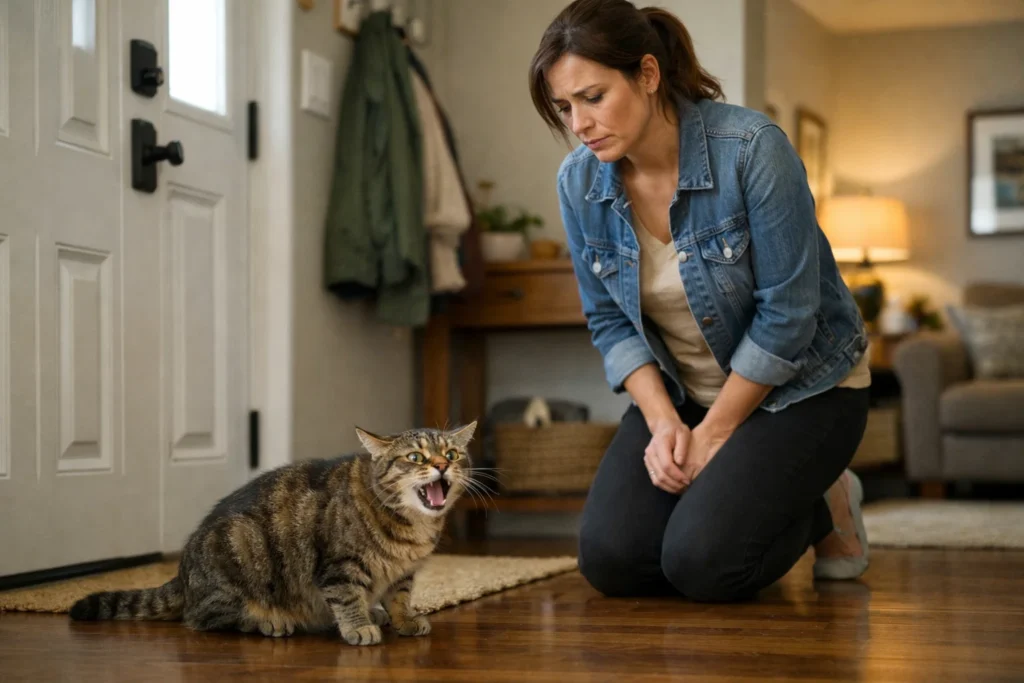
Not sure if your cat is anxious? The signs are usually easy to spot once you know what to look for.
Common Symptoms
Some cats may even show physical signs of stress, like vomiting or over-grooming.
These are all clear cat separation anxiety symptoms, and they shouldn’t be ignored.
Why Toys Help Reduce Anxiety in Cats
Cats are not just pets they are hunters by nature.
In the wild, they spend hours chasing, stalking, and exploring. But inside the house, that natural behavior gets blocked. This leads to boredom, and boredom turns into anxiety.
That’s where cat anxiety toys come in.
Instead of focusing on your absence, your cat focuses on play.
Toys:
A good cat stress relief toy doesn’t just entertain it actually improves your cat’s emotional health.
Best Cat Toys for Separation Anxiety
Now let’s look at the toys that actually work.
Interactive Puzzle Toys
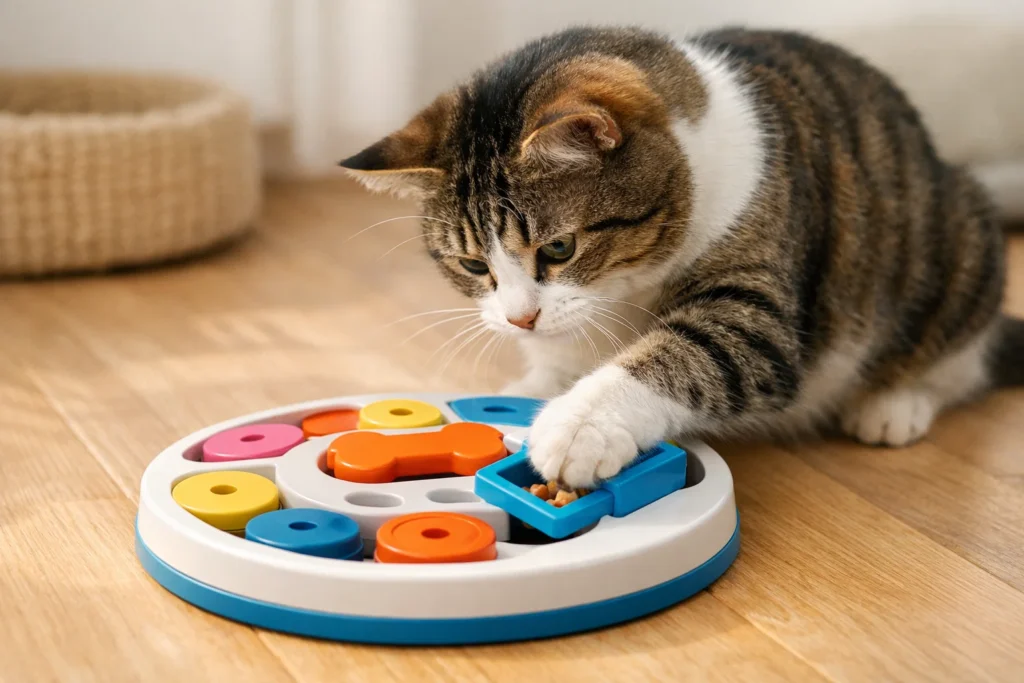
These toys are designed to challenge your cat’s mind.
Your cat has to figure out how to get treats or move parts of the toy. This keeps them busy and mentally engaged.
They are especially helpful for:
Puzzle toys are often called best cat enrichment toys because they improve both mental and emotional health.
Automatic Moving Toys
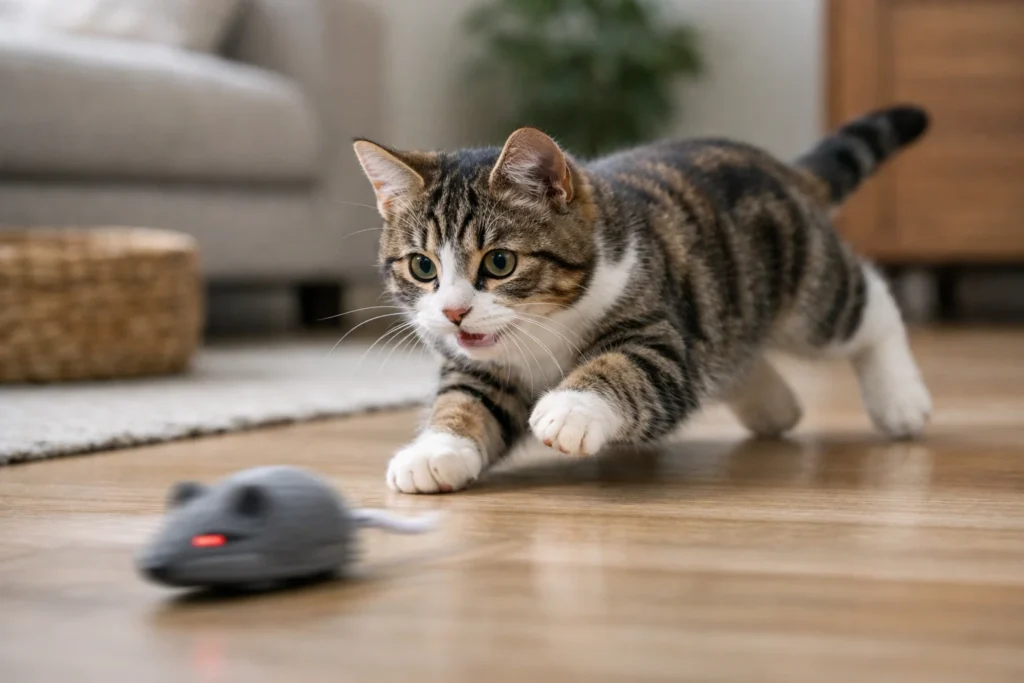
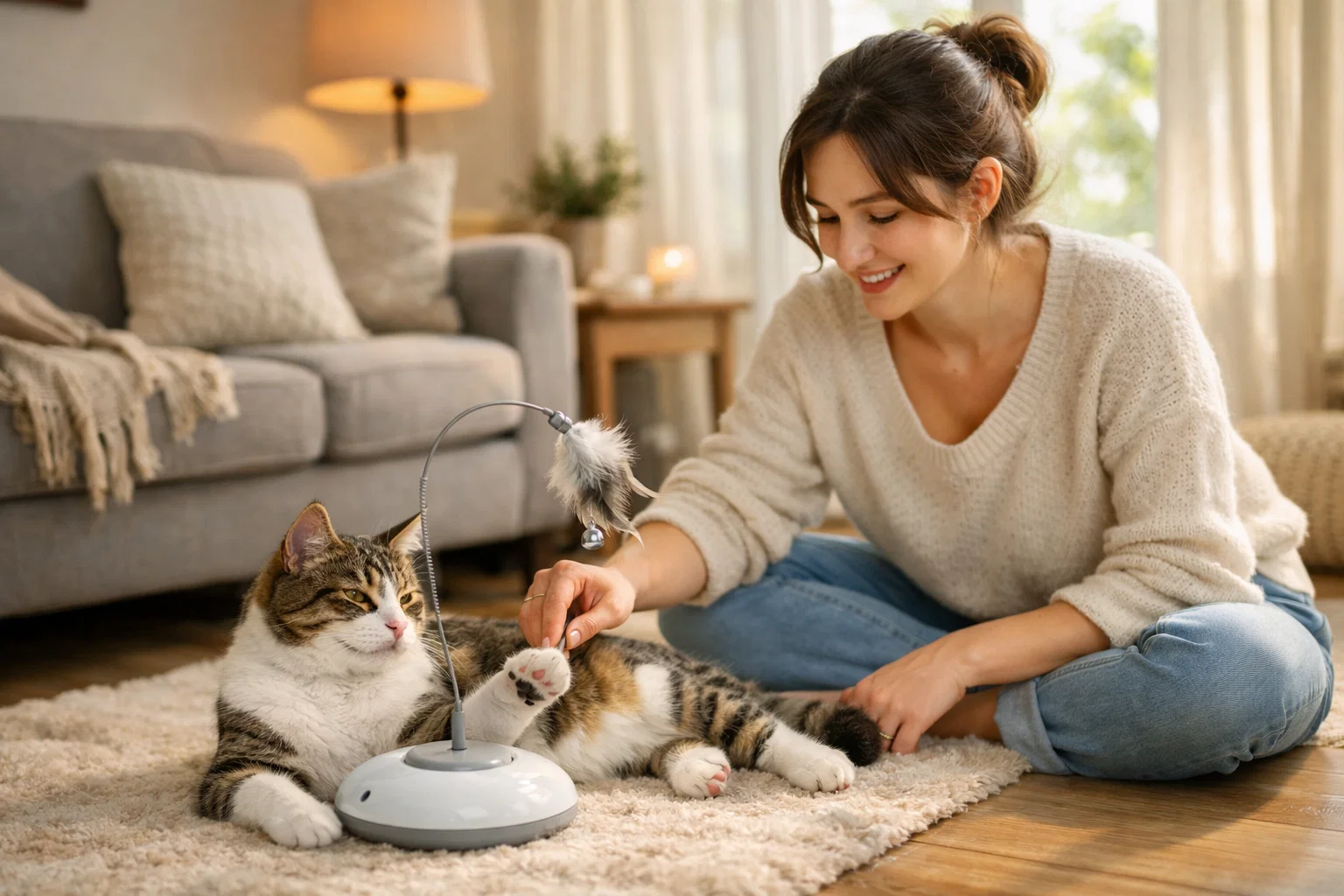
These toys move on their own, which makes them perfect when you’re not home.
They mimic the movement of prey, which triggers your cat’s natural hunting instinct.
This helps:
If your cat has high energy, this type of toy is a great choice.
Comfort Plush & Heartbeat Toys
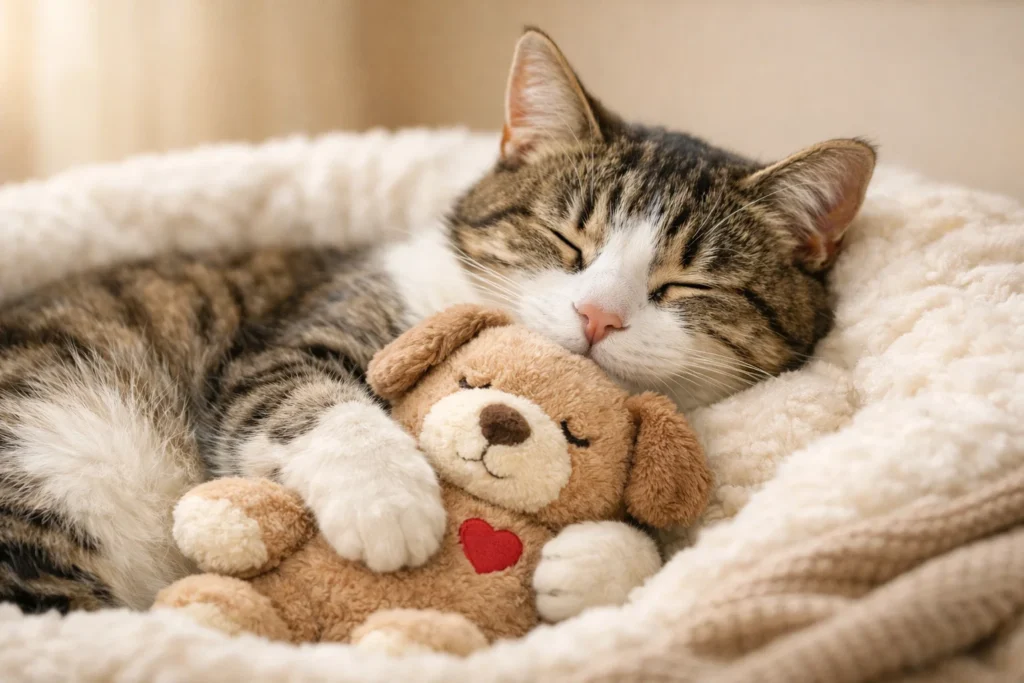
Some cats don’t just need activity they need comfort.
Plush toys, especially heartbeat cat toys, give a feeling of warmth and companionship. They are ideal for kittens or cats that are very attached to their owners.
These toys help:
Catnip & Calming Toys
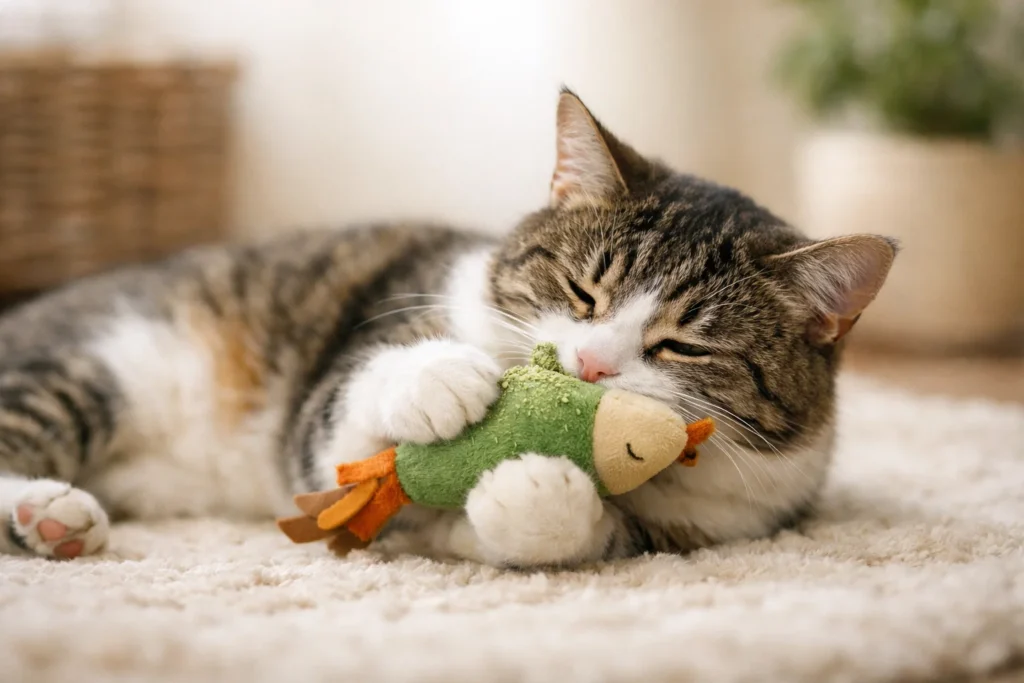
Catnip toys are one of the easiest ways to relax a stressed cat.
They contain natural herbs that make cats feel calm and happy.
These calming cat toys are great for:
Treat-Dispensing Toys
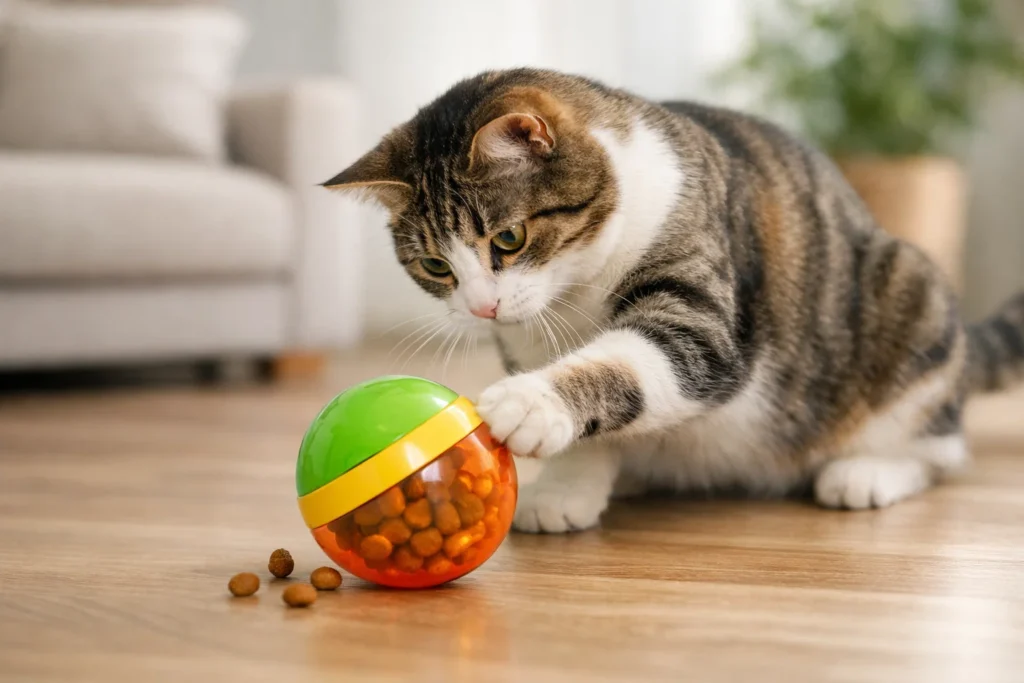
These toys reward your cat while they play.
As your cat interacts with the toy, it releases small treats. This keeps them busy for a long time and creates a positive experience.
They are perfect for:
How to Help Your Cat With Separation Anxiety
Toys work best when combined with simple daily habits.
Start by creating a routine your cat can rely on. Feed them, play with them, and give them toys at the same time each day.
Before leaving, give your cat something engaging. This helps shift their focus from your departure to playtime.
You can also leave behind something that smells like you, such as a shirt. This gives your cat comfort even when you’re not around.
Toys work best when combined with simple daily habits. Creating a routine, leaving engaging toys, and using calming techniques can make a big difference. If you’re also dealing with anxiety issues in other pets, this guide on crate anxiety in dogs solutions can help you understand similar behavior patterns and how to manage them effectively.
How to Know If Your Cat Is Getting Better
You won’t see results overnight but small changes will appear.
At first, your cat may still cry. But over time, the behavior will improve.
Look for these signs:
These signs show your efforts are working.
When to Seek Professional Help
If your cat’s anxiety is severe or doesn’t improve, it’s best to get expert advice.
Organizations like the ASPCA provide trusted information about pet behavior and anxiety.
A vet can also guide you with proper treatment options if needed.
In more serious cases, some pet owners explore additional calming support. For example, this detailed guide on gabapentin for cats anxiety explains how certain treatments can help reduce stress in highly anxious cats.
Final Thoughts
Separation anxiety in cats can feel stressful for both you and your pet.
But with the right approach, it’s manageable.
Using the best cat toys for separation anxiety, along with a simple routine, can help your cat feel safe, calm, and happy even when you’re not home.
Start small. Stay consistent. And give your cat the support they need.